
7 Reasons Your Lights Keep Flickering and How to Fix Them

Last Updated: October 26, 2026
Quick Summary
Flickering lights usually come from a loose bulb, a dimmer that isn't compatible with LED bulbs, loose wiring, an overloaded circuit, or a problem at the panel or utility supply. Match the flicker pattern to the cause: one fixture points to the bulb or socket, while whole-house flicker means an electrician or the utility should investigate.
A loose bulb is the most common and easiest cause of flickering lights to fix yourself.
Non-dimmable LED bulbs flicker on any dimmer, so check the bulb label first.
Loose connections create resistance and heat, which is a genuine fire hazard.
Whole-house flicker points upstream to the panel, service conductors, meter, or utility supply.
Stop and call an electrician if flicker comes with a burning smell, buzzing, or scorch marks.
Table of Contents
Start Here: Match the Flicker Pattern to the Likely Cause
One Fixture, One Room, or the Whole House
1. A Loose Bulb or a Bad Socket Connection
2. Dimmer Switches That Don't Match Your LED Bulbs
3. Loose Wiring and Failing Electrical Connections
4. An Overloaded Circuit or a Breaker That Keeps Tripping
Why Whole House Lights Flickering Points to the Panel or Utility Supply
What's Actually Happening Upstream
Panel-Side Versus Utility-Side: How to Tell Them Apart
How to Document and Report a Suspected Utility Problem
Flickering Lights When Appliances Turn On: Startup Load Explained
LED Lights Flickering: Drivers, Compatibility, and Bulb Lifespan
When to Call an Electrician for Flickering Lights
Stop and Get Help Now: Emergency Warning Signs
Safe Homeowner Checks Versus Electrician-Only Work
What to Have Ready Before the Call
Frequently Asked Questions
Start Here: Match the Flicker Pattern to the Likely Cause
Flickering lights are one of the most common electrical complaints we hear at Thevenin Electric, and the pattern of the flicker usually tells you where to look first. A single bulb that blinks is a very different problem from every light in the house pulsing at once.
Below, we'll show you how to read the pattern, which checks are safe to do yourself, and when flickering lights mean you should stop and call a licensed electrician.
One Fixture, One Room, or the Whole House
The scope of the problem is your first clue. Count how many lights flicker and note when they do it.
What You See | Likely Cause | Who Should Fix It |
One bulb, one fixture | Loose bulb, bad socket, failing bulb | Homeowner check |
All lights on one circuit | Overloaded circuit, loose connection in that circuit | Electrician |
Lights dim when an appliance starts | Startup load, undersized circuit | Electrician |
Whole house flickers randomly | Panel, main connection, or utility supply | Electrician or utility |
Watch out: if flickering comes with a burning smell, buzzing, or scorch marks, stop using that circuit and call an electrician right away. Those are fire-hazard signs, not nuisance symptoms.
1. A Loose Bulb or a Bad Socket Connection
A loose bulb is the most common and easiest cause of flickering lights. A bulb that isn't seated fully makes intermittent contact, so it flickers as the connection breaks and reconnects.
Start here before anything else:
Turn the switch off and let the bulb cool.
Tighten the bulb gently by hand. Don't over-torque it.
Check the socket for corrosion, darkening, or a bent contact tab.
If a new bulb flickers in the same socket, the socket or fixture is the problem. That's a fixture issue, not a bulb issue. A worn socket can arc, and arcing creates heat.
2. Dimmer Switches That Don't Match Your LED Bulbs
LED lights flickering on a dimmer is usually a compatibility problem, not a wiring fault. Older dimmers were built for incandescent bulbs. LEDs draw far less power, so some dimmers can't regulate them smoothly, and the bulb flickers or buzzes.
The fix depends on what you have:
Check the bulb is labeled dimmable. Non-dimmable bulbs flicker on any dimmer.
Match the dimmer to the bulb type. Many LED-compatible dimmers are sold with a minimum load rating.
Replace the dimmer with one rated for LED loads if the mismatch persists.
A common mistake is buying the cheapest dimmer and expecting it to work with every LED. It won't. LED dimmer compatibility is a real spec, and it's worth checking the bulb and dimmer packaging before you buy.
3. Loose Wiring and Failing Electrical Connections
Loose wiring is the cause we take most seriously. A loose connection at a switch, outlet, or fixture creates resistance, and resistance creates heat. That heat is a genuine fire hazard, and it gets worse over time.
Signs that point to a connection problem:
Flickering that comes and goes when the house settles or a door slams
Warm or discolored switch plates and outlet covers
A faint buzzing at a switch or outlet
Tightening connections inside a device box means working with live wiring and knowing which conductor is which. If you suspect loose wiring, contact us to have it inspected and repaired safely.
4. An Overloaded Circuit or a Breaker That Keeps Tripping
An overloaded circuit carries more load than it was designed for.
Ask yourself what's running on that circuit. A space heater, microwave, or hair dryer on the same circuit as your lights is a classic overload.
For a deeper look at why breakers trip and how to tell an overload from a short circuit, read our guide on why breakers keep tripping.
Why Whole House Lights Flickering Points to the Panel or Utility Supply
Whole house lights flickering is a different animal from a single blinking bulb. When every light in the home dims or pulses together, the problem sits upstream of the branch circuits: at the main panel, the service conductors, the meter, or the utility supply itself. That's why whole-house flicker deserves its own troubleshooting path instead of the bulb-and-dimmer checks that fix single-fixture problems.
What's Actually Happening Upstream
Your home's power arrives as two hot legs and a neutral from the utility transformer. Most 120-volt lighting circuits draw from one leg and the neutral. If a main lug, meter fitting, service conductor, or neutral connection develops resistance, the voltage on one leg can rise while the other sags, and lights on both legs flicker or brighten in a pattern.
A common pattern electricians see: flicker that appears when large 240-volt loads (an electric range, dryer, or heat pump) cycle on, then settles. That points toward a service or neutral connection issue rather than a branch circuit.
Panel-Side Versus Utility-Side: How to Tell Them Apart
You can gather useful evidence without opening anything:
Does it affect the whole house or just one leg? If lights on one side of the panel flicker while the other side stays steady, that leans toward a panel or service-conductor problem. If everything pulses together, the utility supply is more likely.
Do neighbors see it? A quick call or text to a neighbor during an episode is one of the most useful data points. If their lights flicker at the same moment, the problem is almost certainly on the utility side.
Does it track with weather or time of day? Flicker that clusters during wind, heat, or neighborhood-wide load peaks often points to the utility distribution system.
How to Document and Report a Suspected Utility Problem
If the evidence points to the utility, a short written log makes the report far more useful than "my lights flicker." Note:
The date and time of each episode and how long it lasted
Which rooms and appliances were affected
Whether large appliances were running
Call your utility's outage or power-quality line with that log. Utilities investigate voltage complaints, and a documented pattern helps them decide whether to check the transformer, service drop, or meter. If the utility finds nothing on their side, the next step is an electrician checking the main panel, main breaker, neutral bar, and service connections.
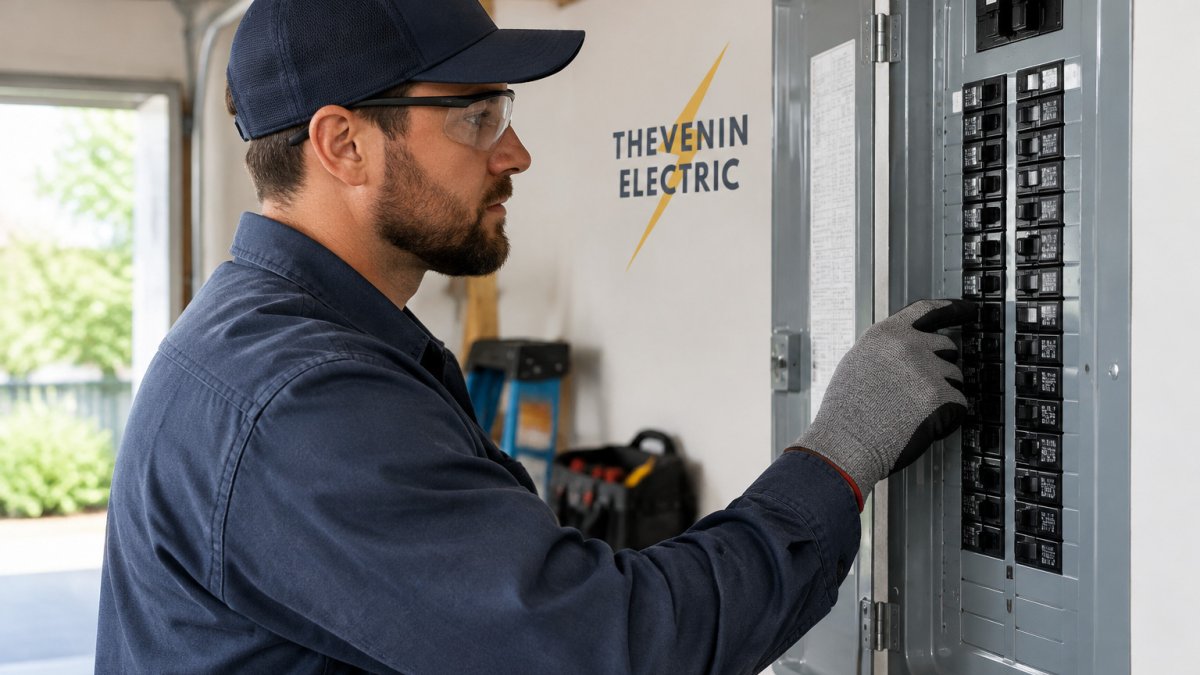
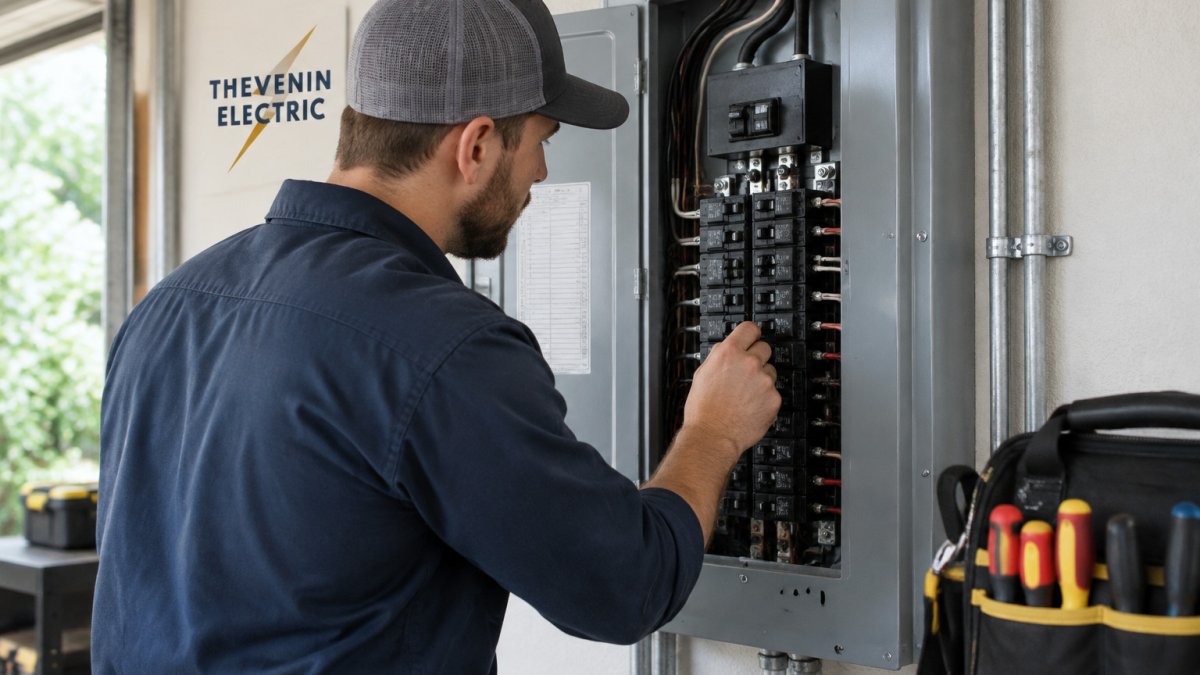
Watch Out Do not remove a panel cover, tighten main lugs, or work on service conductors yourself. The main service entrance remains energized even with the main breaker off in many configurations, and the shock and arc-flash hazard is serious. This is electrician-only work.
If the panel is old, has a known problem brand, or you've been putting off an upgrade, our electrical panel upgrades page explains the options and what a service evaluation involves. If the flicker is intermittent and you can't pin it down, request electrical troubleshooting so the cause gets diagnosed rather than guessed at.
Flickering Lights When Appliances Turn On: Startup Load Explained
Flickering lights when appliances turn on is usually startup load. Motors in refrigerators, furnaces, and air conditioners pull a surge of current for a moment when they kick on.
It's often harmless. It becomes a real problem when:
The flicker is severe or the lights nearly go out
It happens on circuits that shouldn't share a load
It's paired with a breaker that trips
The lasting fix is often a dedicated circuit for the appliance so it isn't sharing with your lighting. Wire sizing and circuit requirements depend on the appliance, the conductor type, and the installation, so the right answer varies by situation.
LED Lights Flickering: Drivers, Compatibility, and Bulb Lifespan
LED lights flickering often comes down to the driver, the small power supply built into the bulb or fixture. A failing driver, a mismatched dimmer, or a poor-quality bulb can all cause flicker. LEDs are also more sensitive to voltage changes than older bulbs, so a small fluctuation that an incandescent bulb would hide can show up as visible flicker.
A few practical points:
A bulb that flickers only after it warms up often has a failing driver.
Cheap LEDs tend to have shorter lifespans and more flicker issues.
If one LED flickers and others on the same circuit don't, replace the bulb first.
If new, quality LEDs still flicker across a circuit, the cause is upstream, and it's time for a professional look.
When to Call an Electrician for Flickering Lights
Most flickering lights are a nuisance, not an emergency. But some patterns are warning signs of a fire or shock hazard, and those need to be treated differently from a bulb that needs tightening. This section draws the line between what's safe to check yourself and what should stop you in your tracks.
Stop and Get Help Now: Emergency Warning Signs
If flickering comes with any of the following, stop using that circuit and get professional help promptly. These are not nuisance symptoms:
A burning or hot-plastic smell near a fixture, switch, or outlet
Buzzing, sizzling, or crackling at a switch, outlet, or panel
Scorch marks, discoloration, or melted plastic on a device or cover plate
If you see smoke, sparks, or flames, leave the area and call 911. For a burning smell or hot device without fire, turn off the affected circuit at the breaker if you can do so safely, and call an electrician. Do not keep using the circuit to "see if it settles."
Watch Out A burning smell, buzzing, or scorch marks point to arcing or overheating connections, a genuine fire hazard that gets worse over time. Don't reset the breaker repeatedly or ignore it. Have it evaluated.
Safe Homeowner Checks Versus Electrician-Only Work
A useful way to sort it out is by what you can safely touch:
Safe to check yourself:
Tighten or reseat a bulb by hand with the switch off
Confirm a bulb is labeled dimmable
Swap a known-good bulb into the same fixture to test
Call an electrician:
Flicker that persists after a bulb swap
Flicker affecting more than one fixture or a whole circuit
Warm, discolored, or buzzing switches and outlets
Never do yourself:
Remove a panel cover or touch main lugs or service conductors
Work on live wiring inside a device box
Replace a breaker or "upsize" one to stop trips
What to Have Ready Before the Call
A focused troubleshooting visit goes faster when you can describe the pattern. Before you call, jot down:
How many lights flicker and which rooms
Whether it's constant, intermittent, or only when an appliance starts
Whether any breaker has tripped and how often
That information helps an electrician decide whether to start at the fixture, the circuit, or the panel, and it saves time on the diagnosis.

If you've had other electricians look and come up empty, a focused troubleshooting visit is the right next step. You can request electrical troubleshooting and get a real diagnosis instead of a guess.
Frequently Asked Questions
Should I be concerned if my lights flicker?
Occasional flicker from one fixture is usually a loose bulb or a dimmer mismatch, and it is not urgent. Constant or random flickering across several rooms deserves a closer look because it can point to loose wiring, an overloaded circuit, or a failing connection at the panel. Stop using the circuit and get it evaluated if you also notice a burning smell, buzzing, scorch marks, or a breaker that keeps tripping. Those signs raise the fire risk and should be checked by a licensed electrician rather than ignored.
Why do my lights flicker when an appliance turns on?
High-power appliances such as a refrigerator, furnace, dryer, or air conditioner draw a surge of current the moment they start. On a shared or heavily loaded circuit, that surge briefly pulls voltage down and every light on the same circuit dims. A small dip on startup is common. Flickering lights when appliances turn on that has gotten worse over time, or that happens across the whole house, can mean a loose neutral, an undersized circuit, or a service connection issue that needs professional testing.
Can a loose connection cause lights to flicker?
Yes, and it is one of the most common causes. A loose bulb, a worn socket, a backstabbed outlet, or a splice that has worked loose all create a connection with higher resistance. That resistance heats up under load, which is why flicker often comes with buzzing or a warm cover plate. Tightening a bulb is a safe homeowner check. Anything behind a cover plate, inside a fixture housing, or at the panel should be handled by a licensed electrician, since loose connections are a genuine fire hazard.
Why does one light flicker while the others stay steady?
A single flickering fixture narrows the problem to that circuit branch. Check the bulb first: swap it with a known-good one and confirm it is the right type for the dimmer or fixture. If a new bulb still flickers, the issue is usually the socket, the fixture wiring, the switch, or the dimmer serving that light. Because the rest of the house is steady, the panel and utility supply are less likely to be involved, which makes this a more contained repair.
Request Electrical Service
Add theveninelectric.com as a preferred source on Google →

Comments